1. Start from the brief
Capture the task, audience, tone, and constraints before any model is asked to draft content.
Studio operating manual
This is the place where prompt systems, model routing, review states, and content operations are kept practical. ONTECH DIGITAL uses the studio as a real working surface for AI short drama production and other long-context workflows.
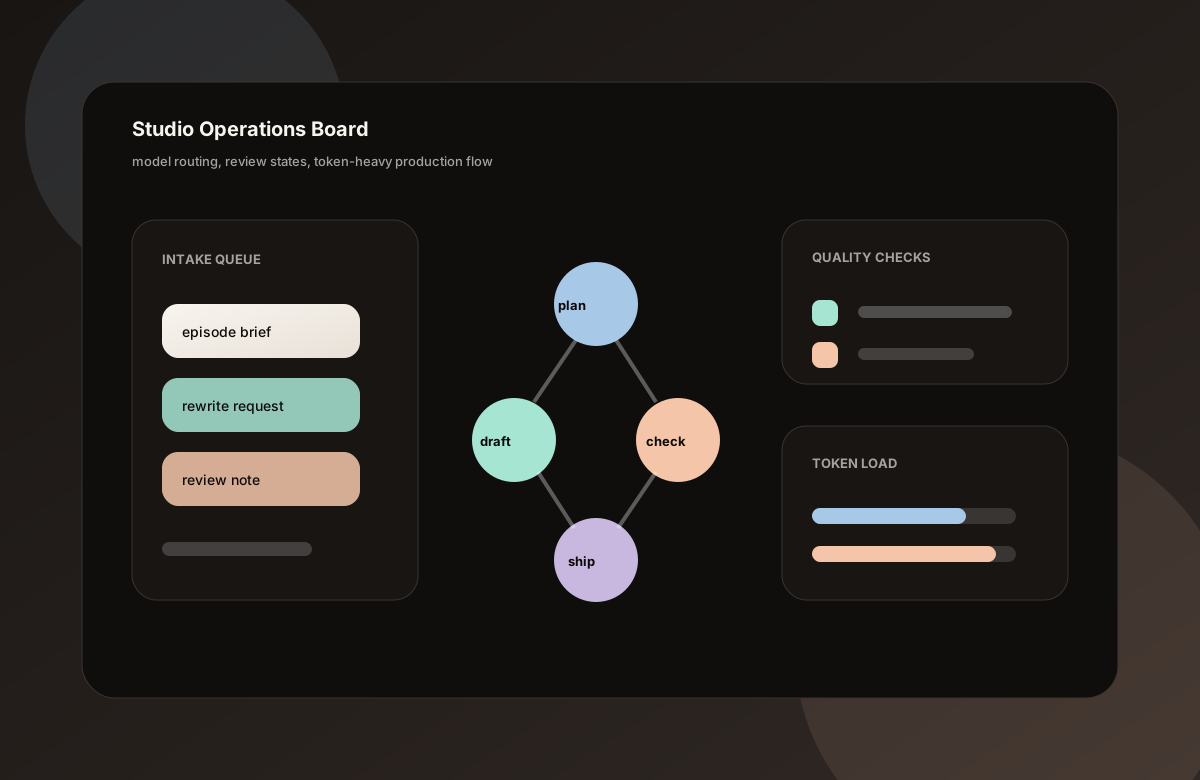
Operating rules
Capture the task, audience, tone, and constraints before any model is asked to draft content.
Use stronger models for planning and critique, lighter ones for cleanup, extraction, and formatting.
Review is part of production. Continuity, quality, and business fit are checked before release.
Daily flow
Collect the brief, target format, turnaround window, and the parts that must not drift.
Draft, expand, compress, and compare outputs across multiple model roles instead of one prompt.
Check continuity, tone, and operational readiness, then hand off something the next person can use.
Lab notes
Reusable instructions keep production repeatable across scripts, scenes, and operational tasks.
The studio supports long-context scripting, scene planning, dialogue rewrite cycles, and version control.
Tracking, naming, and review states matter because the work does not end at generation.
Failure modes
Characters, scene order, and assumptions can drift when the workflow does not keep a stable memory of decisions.
Raw generation is not enough. Outputs must be readable, reviewable, and easy to hand off to the next operator.
The studio stays small on purpose so the process remains understandable and maintainable.